Uncategorized
Best Cactus for a Canadian Apartment: How to Choose the Right Indoor Plant
Nov
Finding the best cactus for a Canadian apartment is less about choosing the most unusual variety and more about matching a plant to your home. Canadian apartments can have bright south-facing windows, shaded north-facing rooms, dry winter air, limited floor space, and temperature changes near glass. The right cactus can handle these conditions beautifully, but only when its basic needs are understood.
This is an evergreen buying and care guide rather than a claim about a current plant trend. Whether you want a compact windowsill accent, a sculptural office plant, or a collector specimen, the same principles apply: assess light first, choose an appropriate size, and buy a healthy, well-established plant.
For a carefully selected range of live cacti, succulents, and seeds, you can browse Cacti Kingdom’s Canadian collection before deciding which type suits your space.
What Makes a Cactus Suitable for an Apartment?
An apartment-friendly cactus should tolerate indoor conditions without becoming difficult to manage. Look for a plant with a growth habit that fits your room, a light requirement you can realistically provide, and a mature size that will not quickly outgrow its location.
Most indoor cacti appreciate:
- Several hours of bright light each day
- A pot with excellent drainage
- A gritty, fast-draining growing medium
- Thorough watering followed by a dry period
- Good air circulation
- Protection from frost and prolonged cold
Cacti are not maintenance-free, but they are often forgiving when the main mistake—overwatering—is avoided. A plant that receives enough light and is allowed to dry properly between waterings is far more likely to remain compact, firm, and attractive.
Start with Your Apartment’s Light
Light is the most important factor when selecting an indoor cactus. A cactus may survive in a dim room for a while, but insufficient light commonly causes weak, stretched growth and a loss of the plant’s natural shape.
South- and southwest-facing windows
These windows usually provide the strongest indoor light in Canada and are suitable for many sun-loving cacti. Columnar types, barrel-shaped plants, and many collector varieties can perform well here. During the brightest part of summer, watch for scorching if a plant has recently moved from a greenhouse into direct sun. Acclimate it gradually.
East-facing windows
Morning sun is often gentler and can work well for smaller cacti and many succulents. An east window is a practical choice for beginners because it provides useful light without the intensity of afternoon exposure.
North-facing windows or shaded rooms
A north-facing window may not provide enough light for most traditional desert cacti, particularly during short Canadian winter days. If this is your only option, choose a low-growing plant with modest light demands and consider a quality grow light. Keep the light on a consistent schedule and position it according to the manufacturer’s instructions.
Signs your cactus needs more light
- New growth becomes unusually narrow or elongated
- The plant leans strongly toward the window
- Spacing between ribs, leaves, or segments increases
- Colour becomes pale or less defined
- The soil stays wet for an unusually long time because the plant is using less water
Rotating the pot every week or two can encourage balanced growth, although a plant should not be moved suddenly from shade into intense direct sunlight.
Good Cactus Choices for Canadian Apartments
There is no single best cactus for every apartment. The following groups are useful starting points because they offer different shapes, sizes, and care profiles.
Compact globular cacti
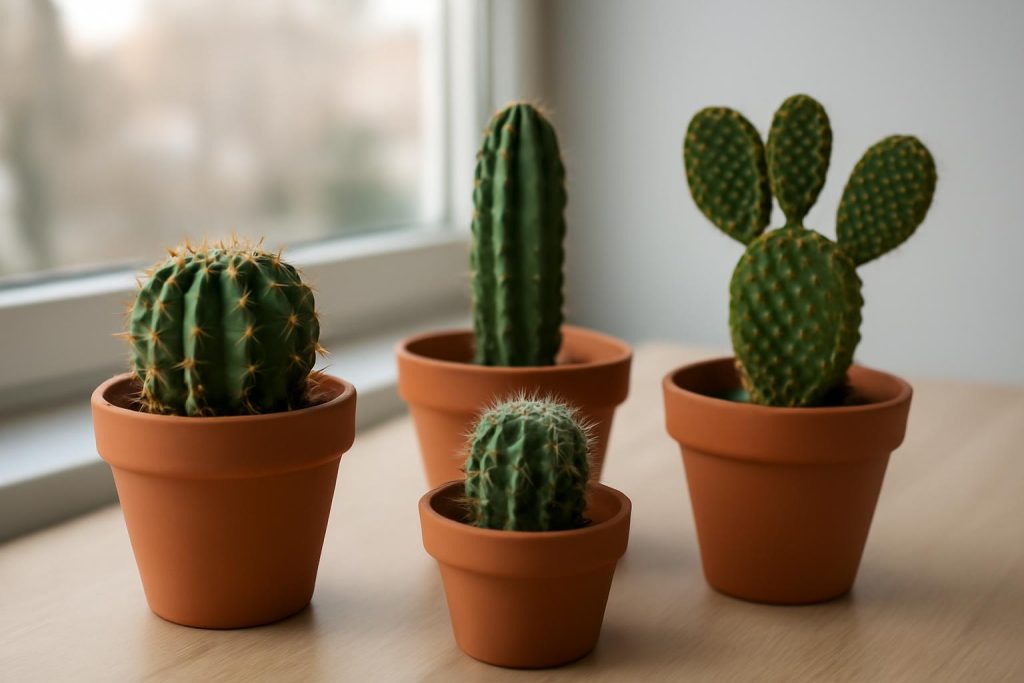
Small globular cacti are ideal for desks, shelves, and narrow windowsills. Mammillaria and similar compact forms can provide interesting spines, texture, and flowers without taking over a room. They are especially useful when you want several plants grouped together in a small collection.
Choose a pot that is only slightly larger than the root system. Oversized containers hold moisture for longer and make it easier to water too frequently.
Astrophytum
Astrophytum offers distinctive geometric forms, patterned skin, and a collector-friendly appearance. Varieties such as Astrophytum asterias and Astrophytum capricorne can make excellent focal points on a bright windowsill. They generally prefer strong light and careful watering, so they are best placed close to a sunny window or under a suitable grow light.
The plant’s shape is part of its appeal. Avoid placing it where it will be repeatedly bumped or crowded by other pots.
Barrel-shaped cacti
Barrel cacti create a bold, architectural look and work well as a single statement plant. Their rounded form suits minimalist interiors, but many develop significant width over time. Check the plant’s expected mature size before placing one on a narrow shelf or small side table.
Columnar cacti
Columnar cacti add height without requiring a large amount of floor width. They can work beside a bright window, in a home office, or as part of a vertical plant display. Keep in mind that taller plants can become unstable in lightweight pots, especially if they are placed where they may be knocked over.
Use a sturdy container and leave enough space around the plant for safe handling. A columnar cactus should never be positioned where people must squeeze past it.
Small succulents for lower-space settings
If your apartment has limited sunlight or you prefer softer shapes, some succulents may be a better fit than a traditional spiny cactus. Echeveria, haworthia, and other compact succulents still need bright light, but their rosette or clustered forms can complement desks and shelves.
When comparing options, you can use the available plant and seed catalogue to review the range of species and formats offered online.
Choosing the Right Plant Size
Plant size should be considered in relation to both the room and the container. A small cactus can eventually become a large specimen, while a large cactus may already need a permanent location.
For desks and shelves
Choose compact potted plants with a stable base. Leave room around the pot so that watering and inspection are easy. A crowded shelf makes it difficult to spot pests, check soil moisture, or rotate plants for even growth.
For living rooms
A medium or large cactus can serve as living décor and create a strong focal point. Measure the available area from floor to ceiling and consider the plant’s width as well as its height. Keep it away from curtains, heating vents, and high-traffic paths.
For offices
Office conditions can be dry and air-conditioned, but the key question remains light. A cactus placed several metres from a window may need supplemental lighting. Compact plants are generally easier to monitor than a large specimen that is hidden behind a monitor or furniture.
Inspect a Cactus Before You Buy
When buying a cactus online, product information and seller practices matter. A healthy plant should be identified as clearly as possible and described with its approximate size, pot format, and growing condition when those details are available.
After delivery, inspect the cactus for:
- A firm body rather than soft, collapsing tissue
- Natural colour appropriate to the species
- No spreading black or wet-looking areas
- No persistent sour smell from the soil
- No visible clusters of cottony pests
- A container that drains freely
Minor marks or changes in colour can occur during handling and shipping, but soft tissue and rapidly spreading discolouration deserve immediate attention. Follow the seller’s care or delivery guidance, and avoid watering a newly arrived cactus until you understand the condition of the soil.
Potting and Drainage in an Apartment
Indoor cactus problems often begin with the pot rather than the plant. A decorative container without a drainage hole can trap water around the roots. If you use a cachepot, keep the cactus in a draining nursery pot inside it and empty any collected water after watering.
A suitable cactus mix should drain quickly while retaining enough structure to support the roots. Many growers improve standard potting soil with mineral components such as pumice, perlite, or coarse grit. The goal is an open medium that does not remain wet for long periods.
Choose a pot that provides only modest extra space. Repotting into a container that is much larger than the root ball increases the risk of prolonged moisture and can slow drying in a cool apartment.
Watering Through the Canadian Seasons
Cactus watering should follow the plant’s growth, light, and temperature rather than a fixed weekly schedule. During bright, active growth, water thoroughly once the growing medium has dried. Let excess water drain completely.
In winter, shorter days and cooler indoor areas usually mean slower growth. Many cacti need significantly less water, and some should remain nearly dry for extended periods. Do not water simply because the calendar says it is time. Check the soil and consider how much light the plant has received.
Keep water away from cold windows and do not allow a cactus to sit in a saucer of water. A dry plant is generally better equipped to handle a cool night than a wet plant exposed to low temperatures.
Managing Canadian Winter Conditions
Indoor heating can reduce humidity, but dry air itself is usually less dangerous to a cactus than cold, wet roots. The bigger concerns are drafts, freezing temperatures during delivery or near windows, and reduced winter light.
Place plants away from:
- Radiators and heat registers
- Frequently opened exterior doors
- Windows with heavy condensation or freezing glass
- Dark corners where the plant cannot dry properly
If your home becomes very warm and bright during winter, a cactus may continue growing slowly and require occasional moisture. If it is cool and dim, reduce watering accordingly.
Live Plants or Cactus Seeds?
Buying a live cactus provides an immediate decorative plant and is often the easiest option for a first-time apartment grower. Seeds offer a different experience: they allow you to observe the full life cycle, compare forms, and build a collection gradually. However, seedlings need more consistent humidity, warmth, light, and attention during their early stages.
For beginners, a healthy potted cactus is usually the most practical starting point. Experienced collectors may enjoy adding seeds from genera such as Astrophytum, Mammillaria, or Ariocarpus to a dedicated propagation setup. You can explore the catalogue of cactus, succulent, and growing categories when comparing live plants, seeds, and supplies.
A Simple Apartment Placement Checklist
Before ordering, answer these questions:
- Which window receives the brightest light?
- How many hours of direct or strong indirect light are available?
- Will the plant fit at its mature size?
- Does the chosen location avoid heaters, drafts, and busy walkways?
- Can you lift and rotate the pot safely?
- Does the container have drainage?
- Will you be able to provide supplemental light in winter if needed?
These questions prevent many common buying mistakes. A modest cactus in the right location will usually perform better than a rare specimen placed in a dark corner.
Frequently Asked Questions
What is the best cactus for a Canadian apartment beginner?
A compact, well-rooted cactus with clear care requirements is a sensible choice. Mammillaria, small barrel forms, and other adaptable potted cacti can work well when placed in bright light and watered carefully.
Can a cactus grow in a north-facing apartment?
It can be challenging without supplemental lighting. Most desert cacti need more light than a typical north-facing window provides, particularly in winter. A grow light can make the location more suitable.
How often should I water an indoor cactus in Canada?
There is no universal schedule. Water when the growing medium is dry and the plant is actively using moisture. Water less often during dark, cool winter conditions, and always ensure excess water drains away.
Are large cacti safe for apartments?
Large cacti can be excellent indoor statement plants if they have a stable container and a location away from children, pets, and high-traffic areas. Consider the plant’s mature size, weight, and spine structure before buying.
Should I buy a live cactus or seeds?
Choose a live cactus for immediate décor and simpler establishment. Choose seeds if you enjoy propagation and can provide the controlled conditions young seedlings require.
Final Advice
The best cactus for a Canadian apartment is the one that fits your light, space, and routine. Start with the brightest practical location, select a size that leaves room for growth, and prioritize drainage over decorative appearance. With restrained watering and seasonal adjustments, a carefully chosen cactus can remain an attractive, long-lived part of your home or office collection.
