
Uncategorized
Best Collector Cactus Seeds in Canada: Ariocarpus, Astrophytum, and Aztekium Compared
Nov
For Canadian cactus enthusiasts, growing from seed is one of the most rewarding ways to build a collection. A packet of seeds can offer access to unusual forms, distinctive flower colours, and species that are rarely available as mature plants. It also gives you the opportunity to observe a cactus from its earliest stage and develop a deeper understanding of its natural growth cycle.
However, not every collector cactus seed is equally suitable for every grower. Some genera need years of patience, careful watering, and consistent warmth. Others are more forgiving and can make an excellent introduction to specialist cacti. If you are comparing the best collector cactus seeds in Canada, Ariocarpus, Astrophytum, and Aztekium are three fascinating groups to consider.
This guide explains their differences so you can choose seeds that match your available light, growing space, experience, and expectations.
Why Grow Collector Cacti from Seed?
Buying a rooted plant provides an immediate display, but growing from seed offers a different experience. Young seedlings develop gradually, allowing you to see how their body shape, tubercles, spines, and colour change over time. For collectors, that process can be just as valuable as owning a mature specimen.
Seed-grown plants may also offer greater genetic variation. Even within one species, individual seedlings can differ in body form, spine arrangement, growth habit, and flowering characteristics. This makes a group sowing especially interesting for anyone who enjoys comparing plants as they mature.
For Canadian growers, seeds are also practical. They are compact, easier to store and handle than live plants, and suitable for indoor propagation during the colder months. A small shelf, humidity dome, and supplemental grow light can provide a useful starting environment without requiring a large greenhouse.
Ariocarpus: Sculptural and Exceptionally Slow
Ariocarpus is one of the most sought-after genera among serious cactus collectors. These unusual plants often have a low, flattened form with prominent triangular tubercles. Their subdued grey-green colouring allows the geometry of the plant to take centre stage, while mature specimens can produce striking flowers in shades of pink, magenta, cream, or white.
Popular species and forms include Ariocarpus fissuratus, Ariocarpus retusus, Ariocarpus kotschoubeyanus, and several horticultural variants. They are prized not because they grow quickly, but because they develop a distinctive architectural appearance over many years.
What makes Ariocarpus appealing?
- Highly distinctive, stone-like appearance
- Unusual tubercle patterns and mature flowers
- Excellent choice for long-term collectors
- Compact plants that suit indoor collections
- Wide variation between seedlings
What should Canadian growers expect?
Ariocarpus seedlings are slow and can be sensitive during their early development. They require a well-drained medium, careful moisture management, and steady warmth for successful germination. Once established, they should not be treated like constantly thirsty houseplants. The growing medium should dry appropriately between waterings, especially during periods of low winter light.
Patience is essential. Ariocarpus is a poor choice if you want a large plant within a year or two. It is an excellent choice if you enjoy watching a living sculpture develop gradually. Because many species are threatened in habitat, choose responsibly propagated seed and avoid plants or seed of uncertain origin.
Astrophytum: Pattern, Shape, and Beginner-Friendly Variety
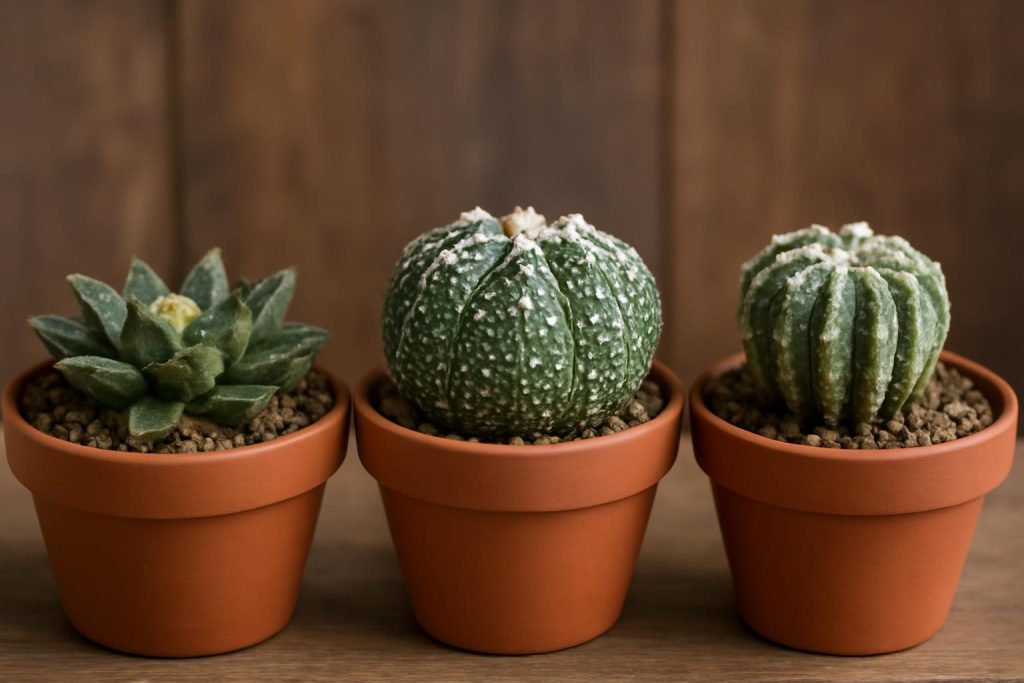
Astrophytum is often a more approachable starting point for collectors who want unusual plants without the extreme pace of Ariocarpus. The genus includes rounded or columnar cacti decorated with flecks, woolly patches, ribs, and elegant star-like forms.
Astrophytum asterias is especially popular for its flattened body and symmetrical rib structure. Astrophytum myriostigma has a more upright shape, while cultivars such as nudum, Onzuka, and other selected forms appeal to collectors interested in pattern and surface texture. Astrophytum capricorne, sometimes called the goat’s horn cactus, is recognised for its twisted, curling spines.
Why choose Astrophytum seeds?
- Distinctive forms are available in a relatively compact genus
- Many species germinate readily under warm, bright conditions
- Seedlings can develop visible characteristics fairly early
- Suitable for windowsill, grow-tent, or greenhouse collections
- Interesting choices for both new and experienced growers
Astrophytum generally prefers strong light, airy soil, and careful watering. Seedlings should receive bright but controlled light while they are young; excessive direct exposure behind glass can cause heat stress or scorching. As plants mature, gradually increasing light helps maintain compact growth and strong colour.
For many Canadian growers, Astrophytum offers an attractive balance between collectability and manageability. It is still a slow-growing cactus, but it is usually less demanding than the most specialised genera. If you are new to seed starting, a small sowing of Astrophytum can be a good way to learn without committing to a highly sensitive species.
Aztekium: A Specialist Challenge for Patient Growers
Aztekium is among the most unusual and desirable cactus genera available to collectors. These plants are typically small, rounded, and heavily ribbed, with a rough, ancient-looking texture. Their compact size can be deceptive: they may require more specialised care and considerably more patience than their appearance suggests.
Aztekium seeds are best viewed as a long-term project. Germination may be slower or less uniform than with more forgiving cactus genera, and seedlings can remain tiny for an extended period. Stable warmth, high humidity during germination, excellent hygiene, and a carefully controlled transition to drier conditions are important.
Who should grow Aztekium?
Aztekium is most suitable for growers who already understand basic cactus propagation and can provide a consistent environment. A heated propagation area or reliable indoor setup is often helpful in Canada, particularly during the darker months. Grow lights can maintain steady development when natural daylight is limited.
This genus is not necessarily the best first packet of cactus seed for a complete beginner. It is better suited to someone who enjoys experimentation, record keeping, and gradual improvement. The reward is a rare-looking plant with a strong presence despite its small size.
Ariocarpus vs Astrophytum vs Aztekium
Each genus has a different appeal. Your ideal choice depends on whether you value ease, speed, rarity, or long-term botanical interest.
| Genus | Best for | Growth pace | Difficulty | Visual character |
|---|---|---|---|---|
| Ariocarpus | Patient collectors and sculptural plant enthusiasts | Very slow | Intermediate | Flattened, tubercled, stone-like forms |
| Astrophytum | New collectors and pattern-focused growers | Slow to moderate | Beginner to intermediate | Star shapes, flecks, ribs, and decorative spines |
| Aztekium | Experienced growers seeking a specialist challenge | Extremely slow | Advanced | Small, heavily ribbed, ancient-looking bodies |
How to Choose Collector Cactus Seeds in Canada
Consider your growing season
Outdoor cultivation is limited in much of Canada, so most seed-grown collector cacti will need an indoor growing area or greenhouse. If your home is cool in spring, choose a setup that can provide consistent warmth rather than relying on occasional sunny days.
Match the genus to your patience level
Some growers enjoy fast visual progress, while others appreciate plants that develop over decades. Astrophytum may provide more noticeable changes early on. Ariocarpus and Aztekium are better for collectors who are comfortable measuring progress over a much longer period.
Buy from a clearly described collection
Look for accurate botanical names, clearly stated seed quantities, and information about whether seed is nursery-produced or responsibly sourced. A reliable description should distinguish between a species, a cultivar, a mixed packet, and an uncertain or lost-label offering.
When you are ready to explore available options, visit Cacti Kingdom’s Canadian cactus collection and review the current selection before choosing a project that suits your growing conditions.
Think beyond germination
Successful sprouting is only the first stage. Ask whether you can provide bright light, ventilation, suitable containers, and enough space for seedlings to mature. A small sowing can eventually become dozens of plants, so label every container carefully from the beginning.
Basic Equipment for Seed-Grown Collector Cacti
A specialised greenhouse is helpful but not always necessary. Many Canadian growers begin with a simple indoor arrangement that includes:
- Clean, shallow seed trays or small containers
- A mineral-based, free-draining propagation medium
- Clear covers or humidity domes for germination
- A bright window supplemented by a suitable grow light
- Labels showing genus, species, and sowing date
- Good airflow once seedlings begin developing
Cleanliness matters because young seedlings are vulnerable to fungal problems. Avoid overwatering and do not leave containers sealed indefinitely. Humidity is useful during germination, but seedlings eventually need gradual ventilation and a controlled transition to normal cactus conditions.
For more ideas about available plants, seeds, and growing categories, the current Cacti Kingdom product catalogue can help you see the range of collector-focused options. You can also use the product category index to explore related cactus, succulent, seed, and growing-supply sections.
Common Mistakes to Avoid
Using too much water
Moisture is necessary for germination, but permanently saturated conditions can damage roots and encourage fungal growth. Once seedlings are established, introduce ventilation and allow the surface conditions to change gradually.
Providing intense light too early
Fresh seedlings need light, but direct midday sun through glass can be harsh. Begin with bright filtered light or a carefully positioned grow light, then increase exposure as the plants strengthen.
Expecting mature size quickly
Collector cacti are often valued precisely because they grow slowly. Avoid forcing growth with excessive fertiliser or frequent watering. Healthy, compact development is more important than rapid enlargement.
Losing the label
With rare or closely related species, an incorrect label can permanently reduce the value and usefulness of a collection. Write labels in permanent ink and keep a backup record with the sowing date and seed source.
Frequently Asked Questions
What are the best collector cactus seeds for beginners in Canada?
Astrophytum is often the most approachable of the three genera discussed here. It offers unusual shapes and patterns while generally being more manageable than Aztekium. Beginners should still learn basic light, watering, and ventilation practices before sowing.
Are Ariocarpus seeds difficult to germinate?
Ariocarpus seeds can germinate successfully when they receive warmth, moisture, cleanliness, and suitable light. The greater challenge is usually the slow development of the seedlings and the need to avoid overwatering as they mature.
Can I grow Aztekium indoors?
Yes. Indoor cultivation is possible if you can provide stable warmth, strong but controlled light, good airflow, and careful moisture management. Because Aztekium is slow and sensitive, it is best approached as an advanced propagation project.
Should I start with seeds or a live collector cactus?
Seeds are ideal if you enjoy the growing process and want to raise several plants. A live cactus is better if you want an established display specimen immediately. Many collectors combine both approaches: they buy a healthy potted cactus for enjoyment while starting a separate seed-growing project.
Build a Collection at Your Own Pace
Ariocarpus, Astrophytum, and Aztekium each represent a different side of cactus collecting. Astrophytum offers accessible beauty and variety, Ariocarpus provides sculptural character and a long-term challenge, and Aztekium appeals to growers who want a truly specialised project.
The best collector cactus seeds in Canada are not necessarily the rarest or most expensive. They are the ones that match your environment, experience, and willingness to care for a plant over time. Choose clearly identified, responsibly propagated seed, prepare a stable indoor setup, and keep detailed records. With patience, a small packet can become the beginning of a remarkable living collection.
