

Lophophora Williamsii var. Real De Catorce Cactus Seeds
Price range: 12 $ through 153 $
Lophophora williamsii var. Real de Catorce Cactus Seeds
Lophophora williamsii var. Real de Catorce is a highly sought-after locality form associated with the Real de Catorce region in San Luis Potosí, Mexico. This historic desert area is renowned for its unique limestone landscapes and exceptional cactus diversity. Collectors value this locality form for its documented geographic origin and the subtle characteristics that distinguish it from other naturally occurring populations of Lophophora williamsii.
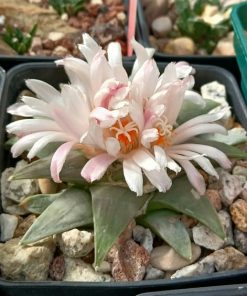
Like all forms of Lophophora williamsii, the Real de Catorce variety develops a smooth, spineless, button-shaped body with broad, rounded ribs divided into soft tubercles. The epidermis typically ranges from blue-green to gray-green and often has a glaucous, waxy coating that helps reduce water loss in its native desert habitat.
As the cactus matures, it forms a compact, flattened body crowned with dense white wool. Older specimens may slowly produce offsets, creating attractive multi-headed clusters over time. Plants grown from seed exhibit natural variation in body size, rib formation, and coloration, making each specimen unique while maintaining the defining traits of the Real de Catorce population.
During the growing season, mature plants produce elegant pale pink to light pink flowers from the woolly crown. Following successful pollination, elongated pink fruits develop and contain numerous tiny black seeds.
Growing Lophophora williamsii var. Real de Catorce from seed allows collectors to cultivate one of the best-known Mexican locality forms while appreciating the remarkable diversity of this iconic desert cactus.
Why Grow Lophophora williamsii var. Real de Catorce?
Famous Mexican Locality Form
Originating from the renowned Real de Catorce region, this variety is highly regarded by collectors worldwide.
Classic Spineless Appearance
Produces smooth blue-green bodies with beautifully defined ribs and symmetrical growth.
Premium Collector Species
An excellent addition for enthusiasts building collections of documented Lophophora locality forms.
Key Features
Blue-Green Epidermis
Develops attractive glaucous blue-green coloration that enhances its ornamental appeal.
Compact Growth Habit
Perfect for collector pots, greenhouse collections, and bright indoor growing spaces.
Long-Lived Cactus
With proper care, plants can live for decades and become exceptional specimen cacti.
Growing Guide
Seed Germination
Sow seeds on the surface of a sterile, fast-draining cactus seed mix. Maintain temperatures between 24°C and 30°C with bright indirect light and consistent humidity until germination.
Watering
Keep the growing medium lightly moist during germination. Once seedlings are established, water only after the soil has dried completely, reducing watering during cooler periods.
Soil and Containers
Use a mineral-rich cactus mix containing pumice, coarse sand, lava rock, or perlite for excellent drainage. Containers should always have drainage holes.
Perfect for Every Collection
Locality Form Collectors
An outstanding choice for enthusiasts seeking geographically documented populations of Lophophora williamsii.
Rare Cactus Collections
Pairs beautifully with Ariocarpus, Astrophytum, Turbinicarpus, Aztekium, and other slow-growing Mexican cacti.
Indoor and Greenhouse Growing
Its compact size makes it ideal for bright windowsills, conservatories, and greenhouse collections.
Frequently Asked Questions
What is the Real de Catorce form?
It is a locality form of Lophophora williamsii associated with the Real de Catorce region of San Luis Potosí, Mexico.
Does it produce flowers?
Yes. Mature plants typically produce delicate pale pink flowers during the growing season.
Is it suitable for beginners?
It requires patience because of its slow growth, but it can be grown successfully with excellent drainage, bright light, and careful watering.
Can it be grown indoors?
Yes. It performs very well indoors when provided with bright light and a well-draining cactus soil mix.
What soil is best?
A fast-draining, mineral-rich cactus soil mix is ideal for healthy long-term cultivation.
| Quantity | 10, 25, 50, 100, 250 |
|---|
Be the first to review “Lophophora Williamsii var. Real De Catorce Cactus Seeds”
Related products

Ariocarpus for Sale in Canada
Ariocarpus for Sale in Canada
Ariocarpus for Sale in Canada
Ariocarpus for Sale in Canada
Ariocarpus for Sale in Canada
Astrophytum Seeds for Sale in Canada
Astrophytum Seeds for Sale in Canada
Ariocarpus for Sale in Canada
Reviews
There are no reviews yet.