Uncategorized
Large Cactus for Sale in Canada: How to Choose, Ship, and Style a Statement Plant
Nov
A large cactus can transform an ordinary room into a calm, sculptural space. Its shape adds height, texture, and character without requiring the frequent watering associated with many tropical houseplants. For Canadian plant enthusiasts, however, buying a large cactus involves more than choosing the tallest specimen available. Size, species, pot weight, winter conditions, lighting, and delivery all affect whether the plant will thrive after it arrives.
This guide explains what to look for when shopping for a large cactus for sale in Canada. Whether you want a dramatic columnar plant, a broad barrel cactus, or a mature collector specimen, the right preparation will help you choose a plant that fits both your space and your growing conditions.
Why choose a large cactus?
Small cacti are easy to place on windowsills, shelves, and desks. A larger cactus offers a different experience: it becomes part of the room’s architecture. Tall species can draw the eye upward, while rounded or clustered forms create a strong focal point on a console, plant stand, or bright office corner.
Large cacti are also useful for people who want an established plant rather than a long growing project. Many cactus species grow slowly, so purchasing a larger greenhouse-grown plant can save years of waiting. A mature specimen may already have a well-developed body, stronger proportions, and distinctive features such as prominent ribs, dense spines, or natural branching.
Before shopping, browse the Cacti Kingdom collection to see the types of plants available and consider whether a live cactus, a young collector plant, or a seed-growing project best suits your space.
What counts as a large cactus?
There is no universal size that defines a large cactus. In practical terms, a cactus becomes “large” when its height, width, or container makes it a noticeable feature in a room. A plant that is 30 centimetres tall may feel substantial on a desk, while a columnar cactus over one metre tall may need a dedicated floor position.
Common size categories
- Medium statement cactus: Often suitable for a tabletop, sideboard, or sturdy plant stand.
- Floor cactus: Tall or wide enough to stand directly on the floor and anchor a room.
- Large collector specimen: A mature or unusual plant selected for age, form, rarity, or distinctive markings.
- Big outdoor cactus: A cold-tolerant or seasonal patio plant that may require winter protection in most Canadian regions.
Always check the listed dimensions of both the plant and the pot. A cactus may be tall but relatively narrow, or short but wide and heavy. The mature shape matters just as much as the current measurements.
Which cactus shapes work best in Canadian homes?
The best large cactus depends on your available light, ceiling height, household traffic, and design preferences. Cacti vary significantly in growth habit, spine density, and tolerance of indoor conditions.
Columnar cacti
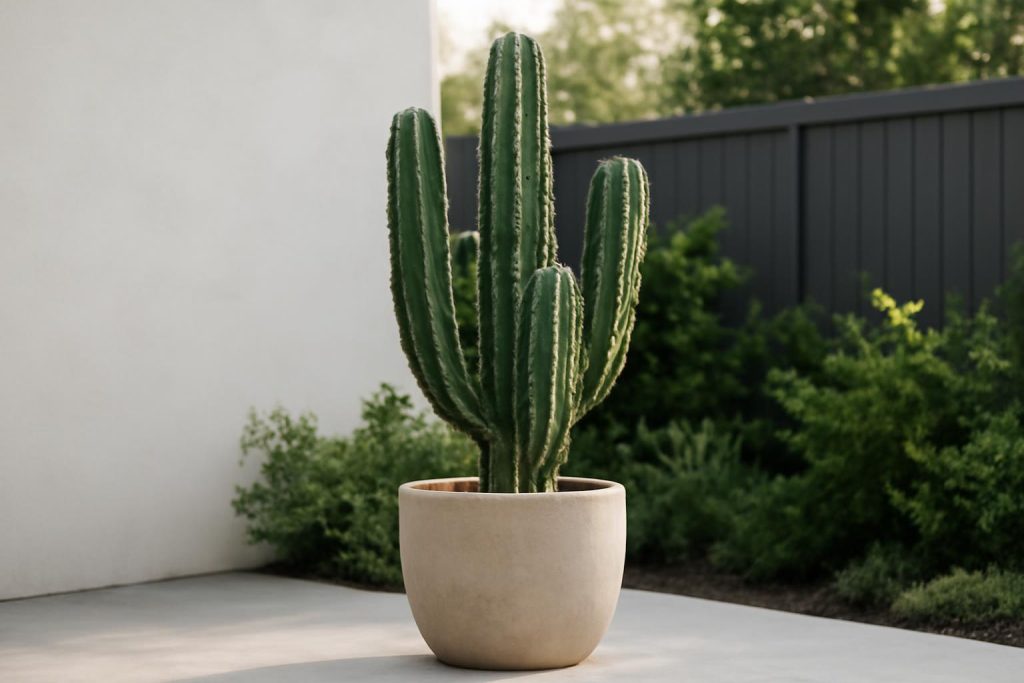
Columnar cacti create vertical emphasis and are often chosen for minimalist interiors. Their upright form works well beside a bright window, near a reading chair, or in an office with plenty of natural light. Because they can become top-heavy as they grow, select a stable container with a broad base.
Columnar plants may also require more room than expected. Leave enough space around the ribs and spines so the cactus does not brush against curtains, furniture, pets, or people walking past it.
Barrel and globular cacti
Barrel-shaped cacti provide visual weight without taking up much vertical space. They look effective on a low stand or in a large planter where their rounded form can be viewed from several angles. Their width should be measured carefully, especially if they will be placed on a narrow shelf or table.
Clustering and branching cacti
Clumping species offer a fuller, more organic appearance. Multiple stems can create a miniature desert landscape in a single pot. These plants may need a wider container and careful handling because individual stems can press against one another during transport.
Architectural collector cacti
Species such as Astrophytum and Ariocarpus are often valued for their geometry, surface texture, and unusual growth patterns rather than height. A larger specimen can make an excellent display plant, but rarity does not necessarily mean low maintenance. Many collector cacti still require strong light, sharply draining soil, and controlled watering.
How to evaluate a large cactus online
When buying online, product information is especially important. Use the listing to assess the plant’s size, container, condition, and expected appearance. If a product is described by a range, remember that living plants naturally vary in shape and development.
Check the plant dimensions
Look for height, width, and whether measurements include the pot. A cactus listed as 60 centimetres tall may include a deep container, leaving the plant itself noticeably shorter. Width is equally important for barrel and clustered varieties.
Review the container details
A large cactus needs a pot that provides both drainage and stability. Plastic nursery pots are lightweight and practical, while ceramic or terracotta containers may offer better weight but can increase shipping costs and handling difficulty. Do not automatically repot a newly delivered cactus into a much larger container; oversized soil volumes remain wet longer and can increase the risk of root problems.
Look for signs of healthy growth
A healthy cactus should generally have firm tissue, consistent colour for its species, and no unexplained soft areas. Minor cosmetic marks can occur naturally, especially on older plants. However, severe collapse, persistent wetness, foul odour, or spreading dark patches should be treated as warning signs.
For the broadest view of currently listed plants and supplies, you can also browse the site’s product catalogue. Availability changes, so a preferred size or species may not remain in stock indefinitely.
Choosing the right location
Light is the most important placement factor for a large cactus. A bright south- or southwest-facing window is often useful in Canada, particularly during the shorter days of autumn and winter. East-facing windows may work for less intense light, while north-facing rooms often require a quality grow light for strong growth.
Introduce a cactus to intense direct sun gradually. A plant moved suddenly from greenhouse shade or a shipping box into hot afternoon sunlight may develop sun stress. Begin with bright, filtered light and increase direct exposure over several days.
Allow a safe clearance zone
Keep spiny plants away from narrow hallways, children’s play areas, and places where pets can knock them over. Avoid positioning a heavy pot on an unstable shelf. If the cactus is tall, use a container with a low centre of gravity and consider securing the pot discreetly if it is located in a busy area.
Consider seasonal temperature changes
Do not place a cactus directly beside a radiator, heat vent, or cold exterior door. Rapid temperature changes can stress the plant, while warm air from a furnace may dry the surface of the soil quickly without fully drying the root zone. A bright, stable location is preferable.
Preparing for cactus delivery in Canada
Large plants require more careful delivery planning than small mail-order specimens. Their height, weight, and shape can make them more vulnerable to tipping or impact during transit. Before ordering, review the seller’s current delivery information and confirm that the service area, timing, and seasonal conditions work for your location.
Cacti Kingdom identifies its service as Canadian shipping only, which can simplify the buying process for customers ordering within Canada. Still, local weather matters. During periods of severe cold, a live cactus may need to be held until safer conditions or delivered through an appropriate local option.
When the plant arrives, inspect the exterior of the package before opening it. Photograph any significant damage and handle the cactus from the pot or root area rather than pulling on the body. Do not water immediately simply because the plant has travelled. Allow it to settle, assess its moisture level, and follow the care instructions provided for the species.
Potting and soil for a large cactus
Large cacti need a porous, free-draining growing medium. A commercial cactus mix can be improved with mineral components such as pumice, perlite, or coarse grit, depending on the species and growing environment. The goal is a mix that drains quickly while retaining enough moisture for the roots to absorb water.
The pot must have a drainage hole. Decorative cachepots without drainage should be used only as outer containers, with the cactus remaining in a suitable inner pot. When repotting, choose a container only slightly wider than the root system unless the plant’s stability requires a heavier outer pot.
Explore the site’s cactus and succulent product categories for available plants, growing supplies, and related options before selecting a container or soil setup.
Watering a large cactus indoors
Watering should follow the plant’s drying cycle rather than a fixed weekly schedule. During active growth, water thoroughly once the growing medium has dried significantly, allowing excess water to drain away. Empty standing water from a saucer or cachepot.
In a cool Canadian room with limited winter light, the cactus may use very little water. Watering too often in these conditions can leave the roots wet for too long. In contrast, a plant receiving strong light, warm temperatures, and active growth may need more frequent attention.
Size does not mean the cactus needs more frequent watering. A large pot can hold moisture for a long time, especially if the soil is dense. Always check below the surface and consider the season, temperature, airflow, and light exposure.
Common mistakes when buying a big cactus
- Choosing by height alone: A tall cactus may be unsuitable if it lacks a stable base or enough ceiling clearance.
- Ignoring mature width: Barrel and clustering species can outgrow narrow shelves quickly.
- Using a decorative pot without drainage: Standing water can damage roots even when the plant looks dry above the soil.
- Placing it in a dark corner: Low light may lead to weak, stretched growth.
- Watering on a calendar: Indoor conditions change throughout the year.
- Moving it directly into intense sun: Gradual acclimation reduces the risk of sun damage.
- Forgetting handling safety: Use thick gloves, folded cardboard, or cactus tongs when moving spiny specimens.
Is a large cactus right for your space?
A large cactus is a good choice when you have strong light, a stable location, and enough room to view and handle the plant safely. It can provide years of interest with relatively little routine care, making it appealing for homes, studios, reception areas, and offices.
If your space is dark, crowded, or exposed to frequent temperature swings, start with a smaller cactus or a more tolerant succulent. You can also grow a future statement plant from cactus seeds, although this requires patience because many desirable species are naturally slow-growing.
Frequently asked questions
Where can I find a large cactus for sale in Canada?
Look for Canadian-focused online nurseries and sellers that provide clear plant dimensions, container information, care guidance, and delivery details. A specialist collection can offer both common statement plants and unusual collector cacti.
Can a large cactus live indoors year-round?
Yes, many cacti can grow indoors year-round when they receive sufficient light and are planted in a well-draining medium. Growth may slow during the darker months, so reduce watering as conditions become cooler or dimmer.
How do I move a large cactus safely?
Wear thick gloves and support the pot rather than gripping the plant. For heavily spined specimens, use folded cardboard, foam, or purpose-made cactus tongs. Ask for help when a plant or container is too heavy to carry securely.
Should I repot a cactus after delivery?
Usually, it is better to let the plant settle first unless the existing container is broken, waterlogged, or clearly unsuitable. Repotting immediately adds another source of stress after transport.
Are large cacti difficult to care for?
They are generally manageable when their basic needs are met: bright light, excellent drainage, careful watering, and safe placement. The main challenge is handling and providing enough room as the plant matures.
Make your cactus a long-term feature
The best large cactus is not necessarily the tallest or rarest option. It is the plant whose shape, mature size, light requirements, and care routine suit your Canadian space. Take accurate measurements, plan the delivery, choose a stable pot, and give the cactus time to adjust after arrival. With the right setup, a carefully selected specimen can become a durable living sculpture and a distinctive part of your home or office for many years.
